SYS / OPERATIONAL | SECTOR // DEFENSE & AEROSPACE
HQ // UT, KY, AK
// SIGNATURE MANAGEMENT · POPULATION-SCALE AGENTIC AI

Modern sensors are everywhere.
Be harder to find.

Kenai Defense builds adaptive technologies that change a platform's visible and infrared signature in real time. We confuse AI classification models and help you survive.

Founded
2020
Domains
Land · Air · Sea · Cyber
Spectrum
Visible · IR · Agentic
Partners
DoD · IC · Allies
01 / What we build

Three capabilities. One survivability posture.

Visible-spectrum and infrared signature control on the platform, and a population-scale simulation environment to design force structure and tactics around them. Each pillar is independently fielded and compounds when paired.

01 / VISIBLE SIGNATURE

Dynamic Camouflage Coating

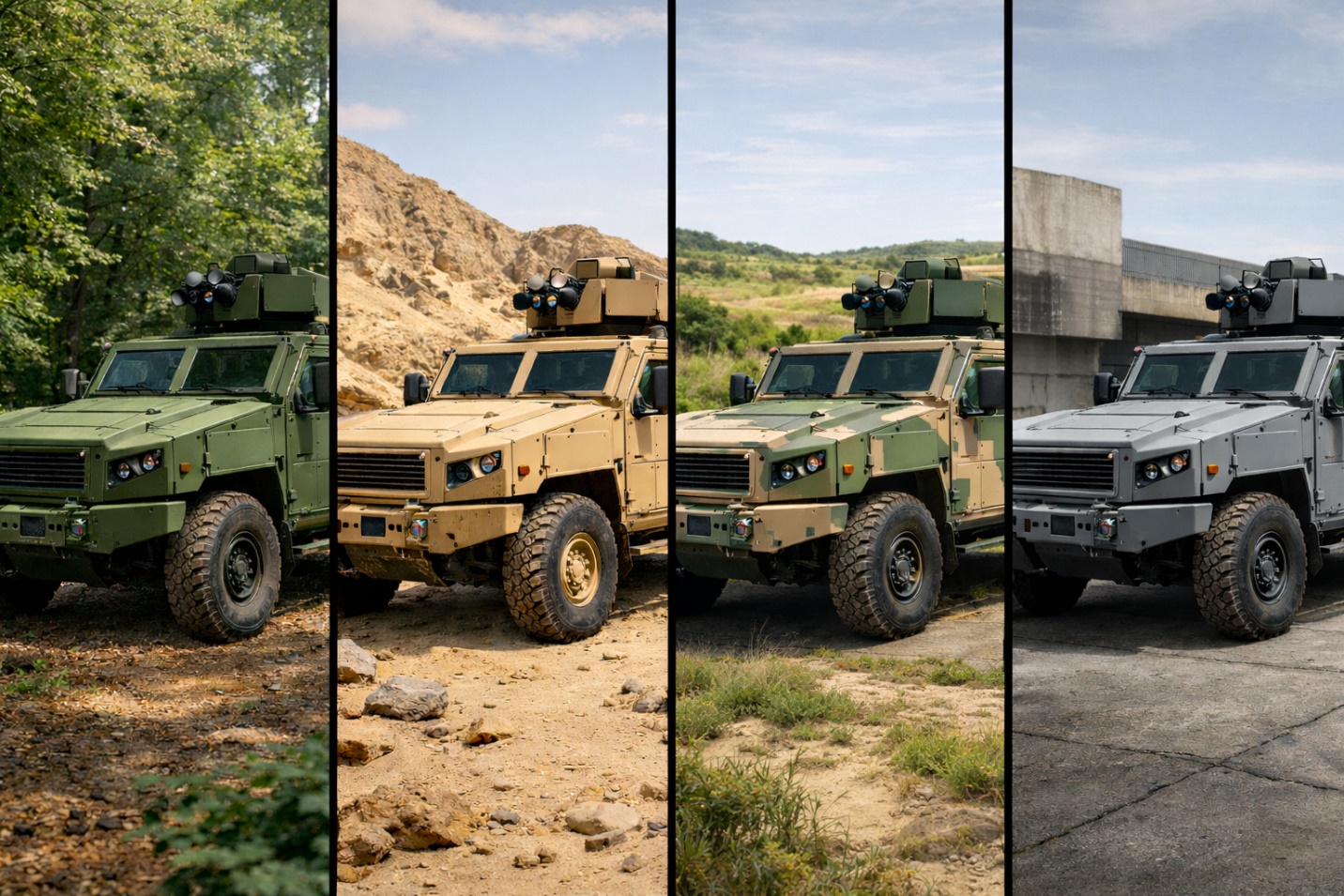
Adaptive visible camouflage that shifts color and pattern as the platform moves through changing terrain — a single coating that replaces the multi-set logistics of static camo.

Inside the coating
02 / INFRARED SIGNATURE

Dynamic IR Signature Control

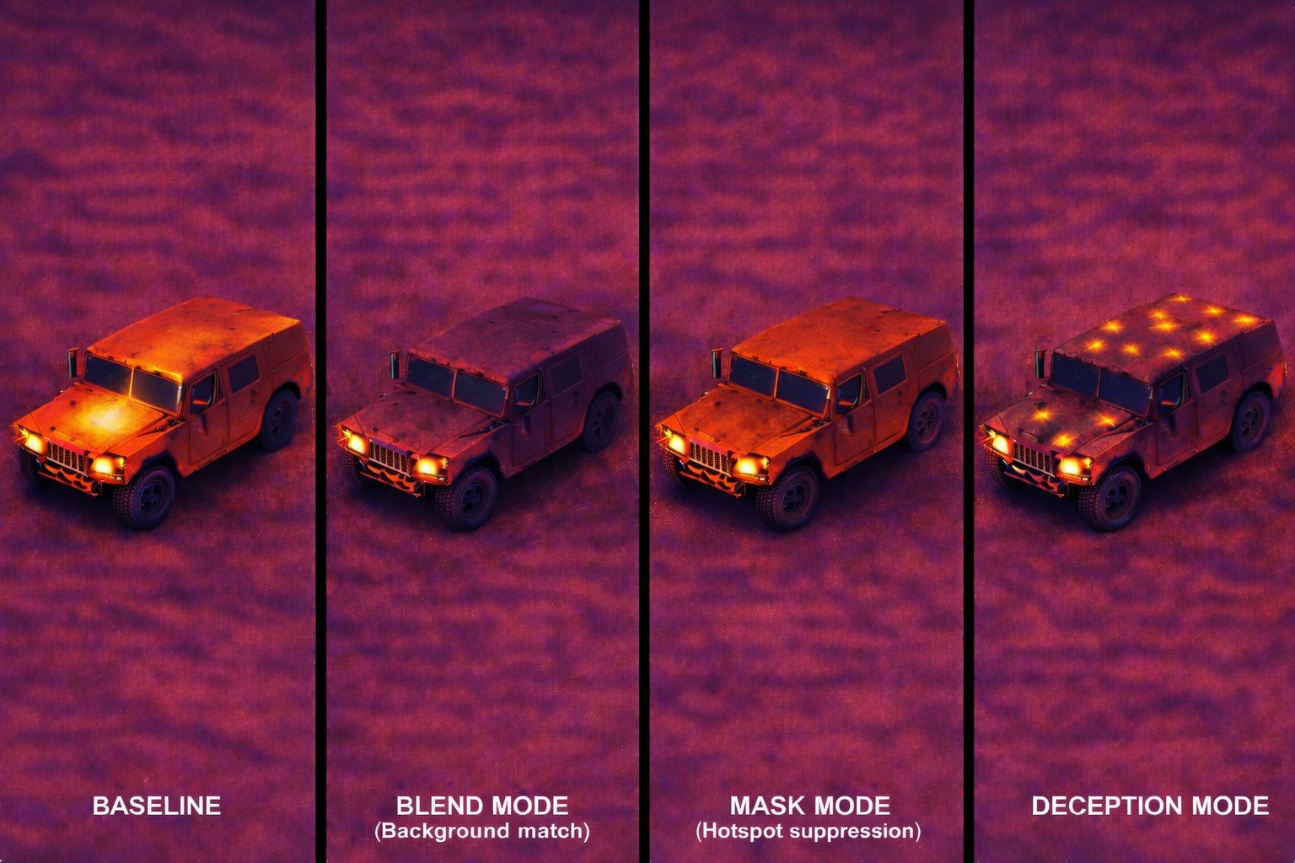
Programmable thermal-signature management. Blend with the background, mask hotspots, or project deceptive thermal effects that complicate identification in IR-observed environments.

Inside the signature
03 / AGENTIC AI

Population-Scale Agentic AI

Red versus blue, at population scale. Our agents reason, plan, and adapt the way real forces do — turning population-scale agentic modeling, force design, and concept evaluation into a continuous, computational practice.

Inside the simulation
02 / Dynamic Camouflage Coating

Adaptive visible camouflage
for changing environments.

A next-generation coating that lets vehicles, equipment, and other mission assets adapt their visible appearance to the surrounding terrain — without swapping nets, covers, or paint schemes.

Tactical vehicle blending into forest, desert, mixed terrain, and urban environments

Overview

Dynamic Camouflage Coating is designed to reduce visual detectability by allowing a platform's exterior appearance to adapt to its environment. Instead of relying on one fixed color or pattern, the coating can be controlled to present different visible states across the surface — letting operators match surrounding environments, reduce contrast, and disrupt the recognizable outline of the asset.

The technology is intended for platforms that move across different terrain types, or operate in conditions where conventional static camouflage is less effective. Adaptability is built directly into the coated surface — a more integrated and responsive approach to visible-spectrum concealment.

How it works

At a high level, Dynamic Camouflage Coating electronically adjusts the visible appearance of a coated surface, presenting selected color states or controlled visual patterns based on mission needs and environmental conditions. The platform looks less conspicuous because its visible appearance is adaptable — not fixed.

Why it matters

Modern operating environments are not static, and camouflage shouldn't be either. As platforms move through different terrain, lighting, and mission conditions, fixed camouflage degrades. Dynamic Camouflage Coating gives operators a more flexible visible-signature management capability that responds to the surroundings — and reduces reliance on multiple separate camouflage systems.

Key benefits

  • B—01
    Rapid Visual Adaptation
    Adjust visible appearance without swapping camouflage nets, covers, or paint schemes.
  • B—02
    Improved Terrain Versatility
    Support concealment across desert, forest, snow, and mixed terrain.
  • B—03
    Shape and Pattern Disruption
    Break up recognizable shapes and outlines to make assets harder to identify visually.
  • B—04
    Reduced Logistics Burden
    Minimize the need for multiple static camouflage solutions tailored to different operating regions.
  • B—05
    Integrated Platform Solution
    Camouflage capability built into the platform surface rather than added externally.

Applications

Tactical vehicles, mission equipment, fielded systems, and other assets where adaptive visual concealment improves survivability — especially when platforms transition between terrain types or must maintain lower visibility without external camouflage systems.

03 / Dynamic IR Signature Control

Programmable thermal
signature management.

Visual concealment is only part of the signature challenge. Modern IR sensors detect thermal contrast, hotspots, and identifiable heat patterns even when visual camouflage is effective. Dynamic IR Signature Control gives operators a controlled thermal appearance — for blending, masking, or deception.

Tactical vehicle in Baseline, Blend, Mask, and Deception thermal modes

Overview

Dynamic IR Signature Control influences how a platform appears to infrared sensing systems. Rather than simply exposing the asset's natural heat signature, the technology enables a more controlled thermal appearance across the coated surface — reducing thermal contrast with the environment, smoothing out localized hotspots, or creating thermal effects that complicate identification and interpretation.

How it works

The technology is designed to manage the apparent thermal output of a coated surface through electronically controlled operation, shaping how the platform appears in the infrared spectrum rather than reflecting its raw underlying heat signature. Multiple thermal-signature effects let a platform blend, mask, or alter its IR appearance based on mission requirements.

Why it matters

As infrared sensing becomes more common across surveillance and targeting environments, managing thermal signature is increasingly important. A platform that is visually concealed may still be highly visible in the infrared spectrum. Dynamic IR Signature Control supports a broader approach to survivability — reducing detectability, limiting recognizable heat patterns, and complicating IR-based identification.

Key benefits

  • B—01
    Background Blending
    Reduce thermal contrast so an asset appears closer to surrounding environmental conditions.
  • B—02
    Hotspot Masking
    Reduce the prominence of localized thermal concentrations that increase detectability.
  • B—03
    Signature Deception
    Controlled thermal effects that make identification and classification more difficult.
  • B—04
    Adaptive IR Management
    A more flexible approach than fixed or purely passive infrared-signature treatments.
  • B—05
    Mission-Relevant Control
    Different thermal effects depending on mission requirements, environmental conditions, and operational needs.

Applications

Tactical vehicles, mission equipment, support assets, and other systems operating in sensor-rich environments where infrared observability matters — particularly where thermal detection, classification, or tracking poses an operational challenge and passive solutions alone are insufficient.

04 / Population-Scale Agentic AI

Red versus blue,
at population scale.

A computational practice for force design and concept evaluation. Our agents reason, plan, and adapt the way real forces do — turning population-scale agentic modeling into a continuous, instrumented loop that runs faster than the operating environment changes.

What it is

A simulation environment in which AI agents represent individual decision-makers — soldiers, units, commanders, civilians — and behave the way real ones do: with goals, doctrine, situational awareness, and the freedom to choose. Run them by the thousands, and what emerges is a high-fidelity model of how a force, a population, or a contested environment actually behaves under stress.

Use case — Red / Blue at population scale

Stand up a scenario. Populate it with red and blue agents wired to the doctrines you want to test. Run it forward at speed. Vary force composition, posture, and tactics. Replay the engagements that mattered. Use the results to inform force design, concept evaluation, and operational decision support — at a tempo that traditional studies and tabletop exercises cannot match.

Why it matters

Modern force design has to evaluate more concepts, against more adversary postures, faster than ever. Population-scale agentic simulation turns that work from a one-off study into a living, instrumented practice — one that compounds with every run.

Where it's used

  • U—01
    Force design
    Evaluate alternative force structures, mixes, and equipping decisions before they're built.
  • U—02
    Concept evaluation
    Stress-test tactics, doctrine, and operational concepts against thinking adversaries at scale.
  • U—03
    Decision support
    Run alternative courses of action forward to expose risk, friction, and asymmetric options.
  • U—04
    Training augmentation
    Generate dense, repeatable, reproducible scenario libraries for staff and operator training.
  • U—05
    Capability integration
    Model new capabilities — including signature-management platforms — before fielding them.

A note on disclosure

Specifics of the agent architecture, scenario libraries, and supported integrations are shared under appropriate agreements. Reach the team to begin a discussion.
Be harder to find.

For program offices, primes, and partners evaluating signature-management technologies or population-scale agentic modeling. Reach our team and we'll route you to the right engineer the same day.

OFFICE // 1753 Redwood Rd, Woods Cross, UT 84087